
Waterborne diseases remain a significant public health threat, especially in crisis-affected regions. One such example is the cholera outbreak in Cameroon in 2021, which saw the South-West region—already burdened by conflict—record 6,027 cases, making it the hardest-hit area (World Health Organization). Within the region, the towns of Buea and Limbe reported the highest number of infections, with 3,136 cases combined.
In response to this humanitarian emergency, Research and Development Without Borders (RDWB) organized a Drinking Water Quality Testing (DWQT) training session with members of the UNICEF WASH Cluster in the South-West region of Cameroon. The WASH Cluster is a coordination network of organizations working to improve access to water, sanitation, and hygiene.

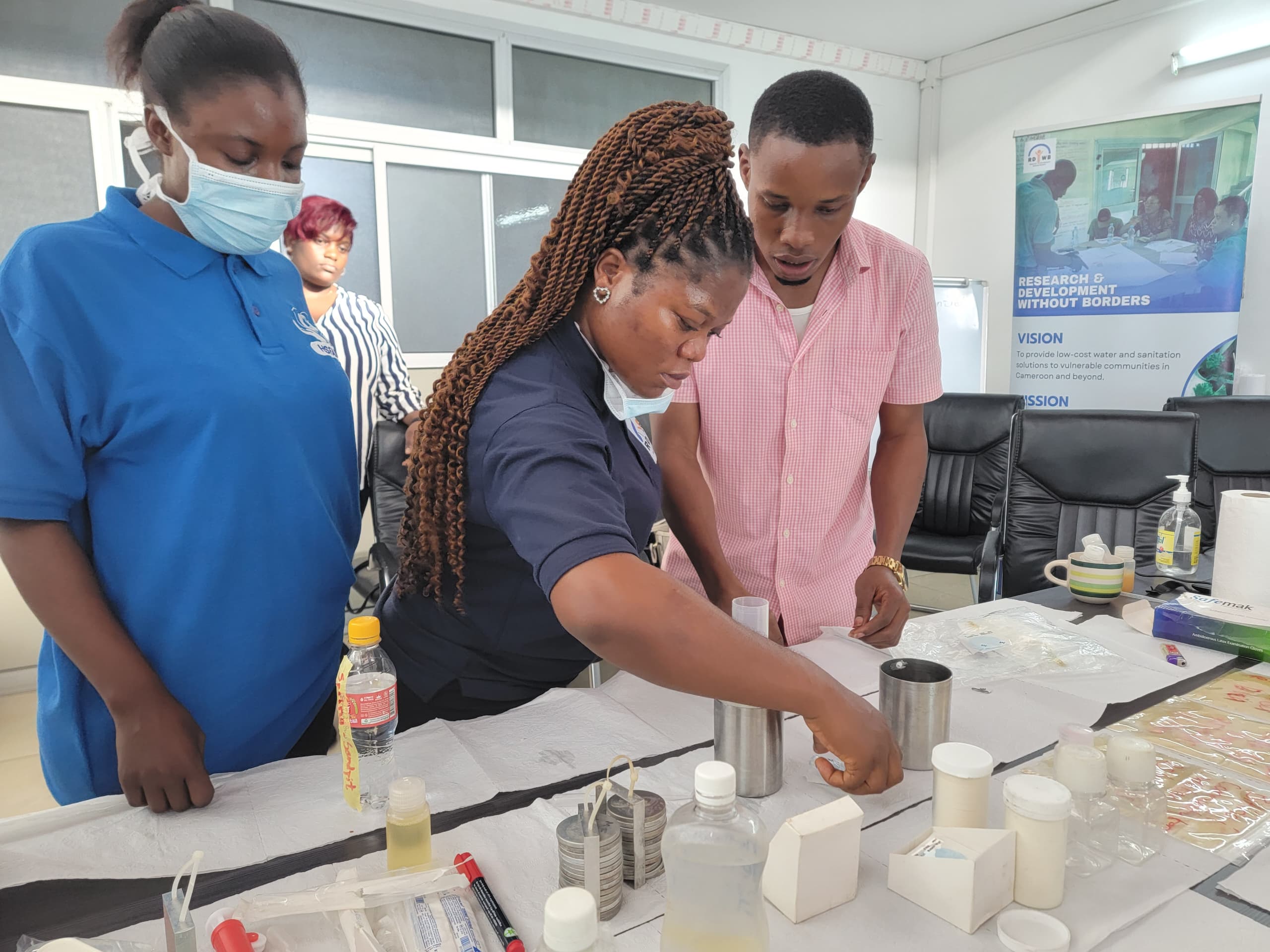
Water is not just life — it is a symbol of hope. Ensuring safe and clean drinking water for people in conflict-affected settings is a collective responsibility. That’s why RDWB specifically selected a diverse group of 25 participants—a mix of WASH professionals and development workers—to benefit from this training. The four-day workshop, held from June 24th to 27th, equipped participants with knowledge and hands-on skills in acceptability, chemical, and microbiological water quality testing — with a strong emphasis on microbiological analysis.
Why focus on microbiological testing?
In crisis contexts, children are especially vulnerable to waterborne illnesses, which remain a leading cause of child mortality (WHO). Faecal contamination is one of the most common and dangerous pollutants in drinking water. During the training, facilitators used a participatory, practical approach to guide participants in sample collection and testing for faecal indicators, enabling them to detect harmful contamination in the water sources used by communities.
By equipping WASH actors with these essential skills, RDWB is contributing to the health, protection, and well-being of children and communities across the South-West and North-West regions of Cameroon. This initiative not only strengthens local response capacity but also serves as a preventive measure against future cholera outbreaks and helps reduce the incidence of other waterborne diseases such as typhoid and diarrhoea.
Looking ahead, RDWB is preparing to deliver a follow-up training on Household Water Treatment and Safe Storage (HWTS) for the same group of participants. This upcoming session will complement the DWQT training and empower field workers to protect themselves and the vulnerable populations they serve from the devastating health and economic consequences of unsafe water.


