
“Last year, during a networking session at a prestigious conference in Yaoundé, I engaged in a conversation with a fellow attendee who approached me to talk about her projects and aspirations. She had a lot to share, and I listened attentively. At some point, she asked what I do. I highlighted a few of my roles, but what caught her attention was my work as a Menstrual Health and Hygiene (MHH) Advocate.
Given the importance of the topic, I took time to explain the challenges young girls and women face in accessing sanitary pads and other menstrual supplies. However, despite my explanation, she still exclaimed, ‘How can a girl be unable to afford a sanitary pad? It’s just 700 XAF!’ Her reaction was both surprising and disappointing—but it stemmed from ignorance and denial. Sadly, she is not alone. Many still believe that period poverty is a myth. MHH continues to be neglected, both locally and internationally.” *
— Chantal N., MHH Project Lead at Research and Development Without Borders (RDWB)
In 2024, RDWB launched the Empower Her Future Campaign, a bold initiative aimed at fighting period poverty in Cameroon by providing young girls with sanitary pads, menstrual supplies, and accurate information about menstrual health and hygiene. The project also targets boys and young men, recognizing that period poverty affects everyone — directly or indirectly.
But how can boys suffer from period poverty?
“Period poverty refers to the inability to afford and access menstrual products, sanitation and hygiene facilities, and the education and awareness needed to manage menstruation with dignity” (UN Women, 2024). By including boys and men in menstrual education, we help dismantle stigma, promote empathy, and encourage community-wide solutions.
One of the unique features of the Empower Her Future Campaign is the creation of the Menstruation First Aid Kit — a small, portable bag that contains sanitary pads, a disposal bag, liquid soap, and hand sanitizer. These kits are designed to help girls manage unexpected periods, encourage regular pad changes, promote hand hygiene, and support the safe and dignified disposal of used materials.

Since 2025, RDWB has raised local funds through online donations, appeal letters, and bake sales to produce and distribute these kits. To date, over 180 kits have been distributed to internally displaced girls in schools and churches in suburban areas around Yaoundé.
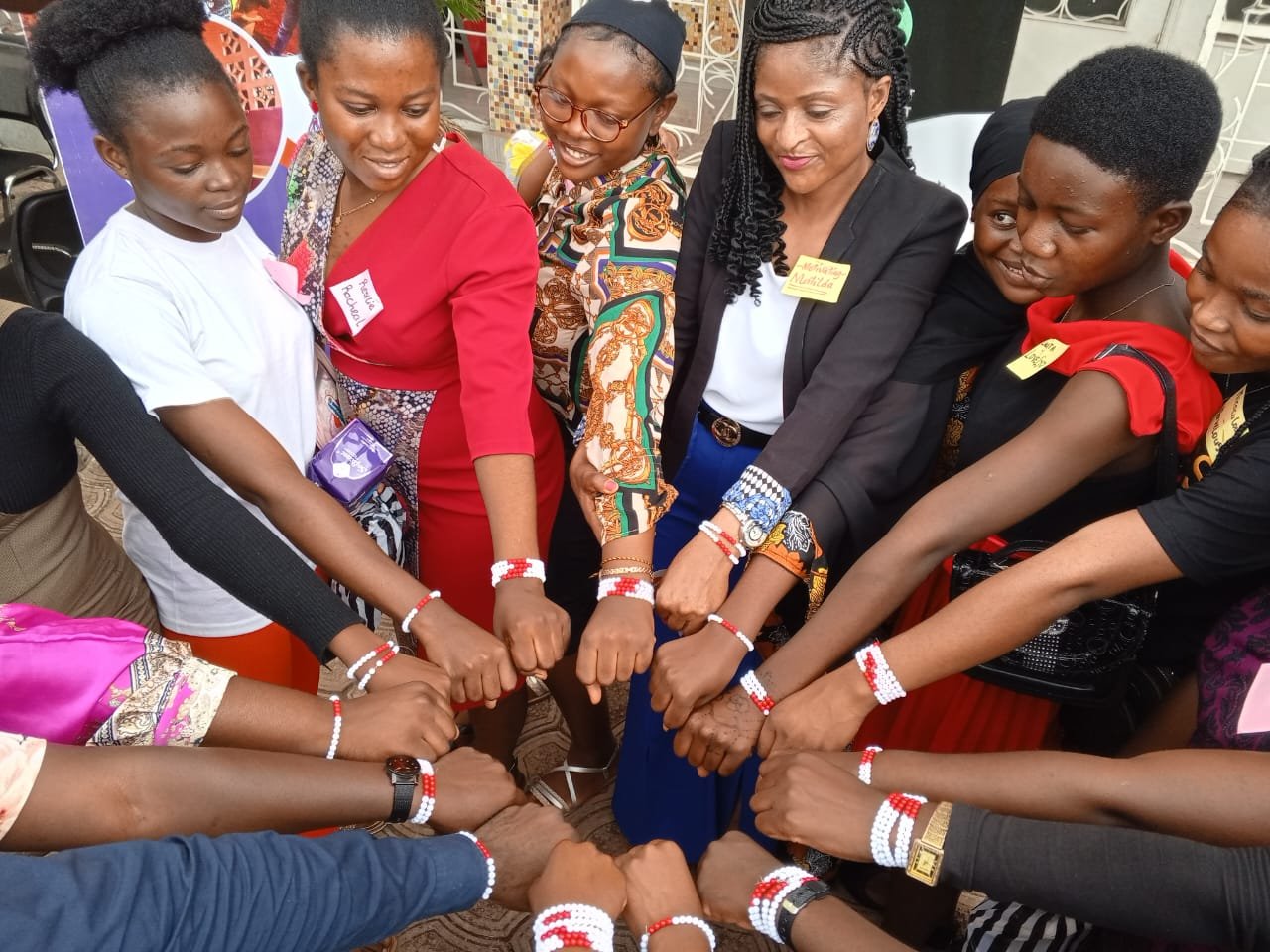
Beyond material support, RDWB has also focused on education and mental health. Under the Empower Her Future Campaign, we have organized four webinars and two in-person capacity-building sessions, reaching more than 692 young girls and boys with practical knowledge and psychosocial support related to menstrual health and the emotional challenges surrounding it.
RDWB is not only reshaping the future of MHH in Cameroon — we are actively contributing to the health, dignity, and educational outcomes of girls. By addressing menstruation-related stigma and absenteeism, we are helping girls stay in school and thrive.
But this is just the beginning.
We remain committed to innovating and delivering sustainable, community-driven solutions to menstrual health challenges—until menstruation is normalized, and every girl and woman in Cameroon can manage her period safely, confidently, and with dignity.


